How To Plan Cash Flow in a Seasonal eCommerce Business

The cash flow playbook for seasonal eCommerce
- Start planning 6-8 months before peak season begins
- Hold a 3-6 month fixed-cost cash reserve as your floor
- Run a 13-week rolling forecast with best, base, and worst-case scenarios
- Account for processor holds in your forecast (Stripe ~2 days, Amazon up to 14 days)
- Pair revenue-based financing with seasonal cycles so repayments flex with your sales
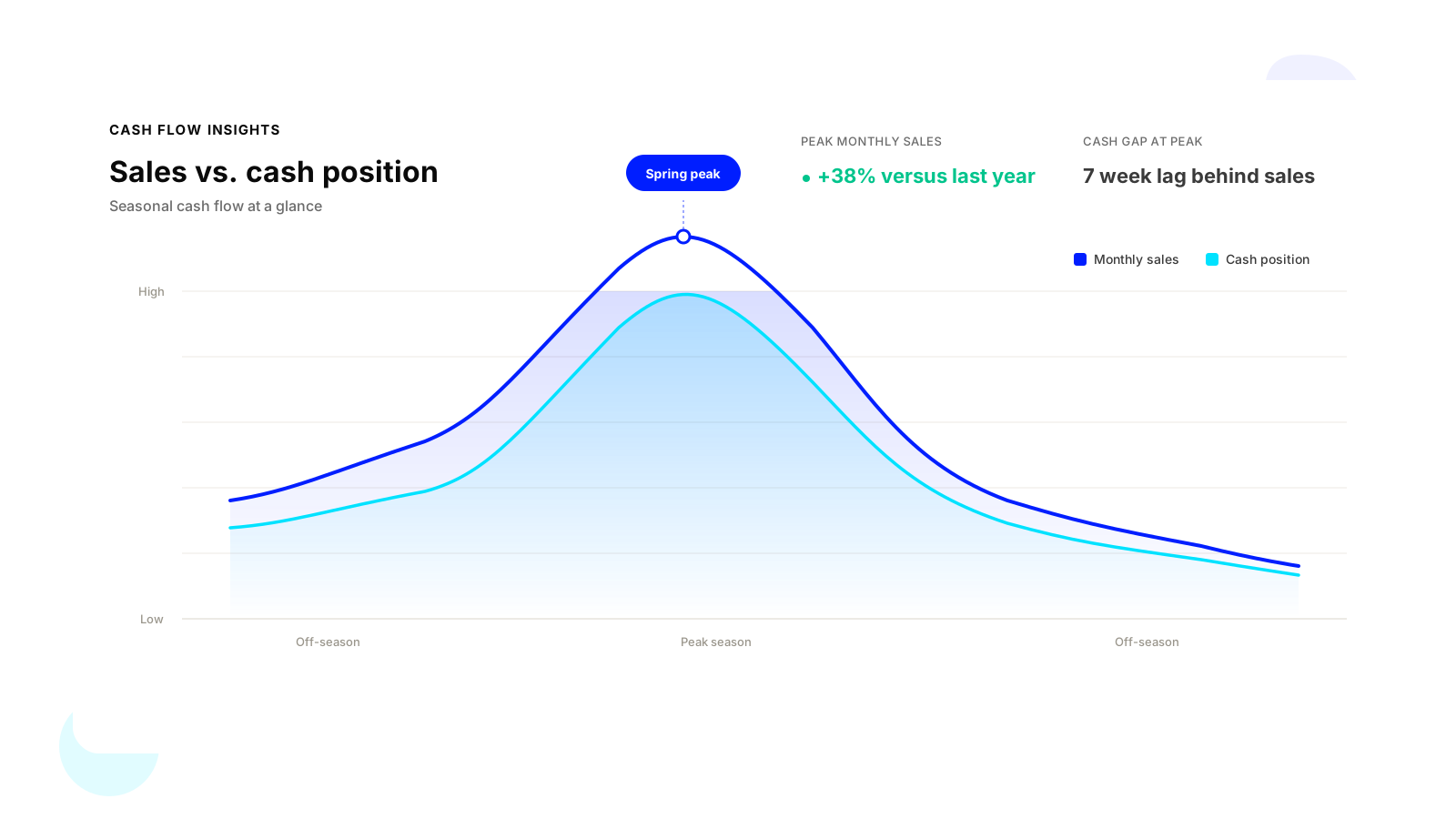
Seasonal cash flow separates thriving eCommerce businesses from those that struggle year-round. Consider a brand owner who built a Mother's Day gift business generating £1.5 million in March alone. The rest of the year? Monthly revenues rarely top £450,000.
These fluctuations are dramatic but not unique. Every seasonal retailer faces demand swings that boost profits in peak season and strain cash reserves the rest of the year.
Plan your cash flow to match these cycles and you turn seasonality from a stressor into a competitive advantage.
How To Build a 13-Week Cash Flow Forecast for Your Seasonal Business
A 13-week rolling cash flow forecast is the operating standard for seasonal eCommerce. It gives you visibility through one full quarter, long enough to spot trouble and short enough to act on it. Update it weekly. Run scenario analysis across three cases. Review results before every major spending decision.
Without an accurate forecast, you either overstock and tie up cash in unsold inventory, or understock and miss sales opportunities. Follow these four steps to build a forecast that matches your business cycles.
Step 1: Pull 2-3 years of monthly sales data
Start by gathering sales data for the last 2-3 years of operations. This historical view reveals your peak and trough patterns with precision. You identify when sales begin to climb, which products drive the most volume, and how long each seasonal cycle lasts.
Look for year-over-year trends. Are your peaks getting sharper? Is your off-season lengthening? These patterns shape every downstream decision. A tool like Conjura can surface these trends automatically across all your sales channels, saving hours of manual data work.
Step 2: Calculate your cash conversion cycle
Your cash conversion cycle (CCC) measures how long cash stays tied up in operations before returning as revenue. The formula:
CCC = Days Inventory Outstanding + Days Receivables Outstanding − Days Payables Outstanding
A shorter CCC means faster cash recovery. A longer CCC means you need more cash to bridge the gap. During peak season, inventory days typically increase while payable days compress as suppliers demand faster payment for larger orders.
Step 3: Build the rolling 13-week forecast
A 13-week forecast covers one full quarter of cash positions. Update it weekly. Run scenario analysis across three cases:
- Best case: Sales hit 120% of target, suppliers extend terms
- Base case: Sales hit target, standard payment terms
- Worst case: Sales come in 20% below target, suppliers demand faster payment
Each scenario produces a different cash position. Know your floor.
Step 4: Stress-test your downside
Ask the hard question: what happens if peak sales come in 20% below plan? If you already ordered and paid for inventory, that cash stays locked up until you sell through. Your CCC extends. Your operating expenses continue.
Run the math on this scenario before you commit to purchase orders. Know exactly how many weeks of runway you have if demand disappoints.
How To Build a Seasonal Budget That Protects Your Cash
Your forecast tells you what sales to expect. Your budget tells you what you can afford to spend. Build it around eCommerce-specific cost categories and maintain a cash reserve that protects you through the worst-case scenario.
Map your cost categories
Break your spending into these core buckets:
- Inventory (COGS): Product costs, supplier deposits, payment terms
- Marketing and ad spend: Acquisition costs that scale with sales targets
- Warehousing: Storage fees, pick-and-pack costs, seasonal overflow
- Shipping: Carrier rates, fulfilment fees, returns processing
- Payment processing fees: Typically 2-3% of revenue
Each category behaves differently through your seasonal cycle. Inventory and marketing spike before peak season. Warehousing costs lag as you store product before and after the rush.
Size your cash reserve
Keep 3-6 months of fixed operating expenses in reserve. This buffer covers you if sales disappoint, a supplier fails to deliver, or a marketing channel underperforms.
Calculate your fixed monthly burn rate first. Include payroll, rent, software subscriptions, insurance, and financing payments. Multiply by 3 for a minimum reserve, 6 for a conservative cushion.
Account for the order-to-cash gap
Your ability to pay for inventory defines your order size. If you lack financing, you order less than demand requires and miss sales. This is particularly painful for growing businesses whose future sales outpace current cash reserves.
Build this gap into your budget. Know exactly how much financing you need and when you need it to meet your sales forecast.
How To Manage Lead Times and Supplier Payment Terms
Lead time is the period between when you place an order with a supplier and when you receive the shipment. It dictates when you commit cash and when you generate returns on that investment.
Map lead times to your sales calendar
An eCommerce business selling outdoor patio furniture needs inventory in stock by February to capture spring orders. Manufacturing takes months. That means placing orders in August for a 6-8 month lead time, with a deposit due at order placement and the balance due on shipment.
Holiday chocolate sellers face a different reality: 2-3 week lead times and faster capital cycles. Know your category's lead time and work backwards from your first expected orders.
Negotiate better payment terms
Standard terms vary by industry and supplier relationship. Push for:
- Net-30, Net-60, or Net-90 payment windows
- Lower deposits with the balance due on shipment
- Volume commitments in exchange for extended terms
- Staged payments tied to production milestones
Longer payment terms directly reduce your CCC. Every extra day of payables is a day your cash stays in your account, funding operations instead of sitting with a supplier.
Use payment terms as a cash flow lever
A supplier may offer better payment options if you agree to pay a marginally higher price per unit. Your COGS increases but your cash flow improves. Run the math: a 2% price increase for Net-60 terms instead of Net-30 is worth it if it eliminates your need for external financing.
How To Survive the Off-Season Without Draining Cash
Seasonal businesses generate most of their revenue in peak season but operate year-round. Your off-season cash flow plan determines whether you enter the next peak from a position of strength or scrambling for cash.
Separate fixed costs from variable costs
Fixed costs continue regardless of sales volume: rent, core payroll, insurance, software subscriptions. Variable costs scale with activity: ad spend, warehouse picking fees, shipping, payment processing.
Know exactly what your monthly burn rate is at zero sales. That floor defines your survival threshold.
Set a monthly burn rate target
During off-season, your goal is to minimise cash outflow while maintaining readiness for the next peak. Set a specific monthly burn rate target and manage to it. Review weekly. Cut anything that exceeds the target without clear ROI.
Scale down strategically
Apply these levers to reduce off-season costs:
- Reduce ad spend to retention-only campaigns targeting existing customers
- Negotiate a smaller warehouse footprint or shared storage
- Use seasonal staff for peak periods instead of year-round employees
- Pause non-essential software subscriptions
- Defer discretionary projects until cash flow recovers
Use off-season to negotiate next year's terms
Suppliers are more flexible during their slow periods too. Use off-season to renegotiate payment terms, lock in pricing for next year's orders, and secure production slots before peak demand hits their capacity.
Reallocate marketing to brand-building
When direct-response advertising yields diminishing returns, shift budget to brand-building activities: content creation, email list growth, social engagement, and community building. These investments cost less to execute and pay off when demand returns.
How Payment Timing and Returns Affect Your Cash Position
Your P&L shows revenue when a sale occurs. Your cash flow shows revenue when the money hits your bank account. The gap between these two can strain cash during peak season when transaction volumes spike.
How do payment processor hold periods affect cash flow?
Different payment processors release funds on different schedules. Stripe typically holds funds for around 2 days. Amazon holds marketplace payouts for up to 14 days. PayPal varies by account history and risk profile.
At low volumes, these hold periods are manageable. At peak volumes, the gap expands. If you process £500,000 in Amazon sales over two weeks, that cash remains unavailable for 14 days while you pay suppliers, run ads, and cover fulfilment costs.
Build payout timing into your cash flow forecast. Map expected sales by channel and apply each processor's hold period to project when cash actually arrives.
How do post-peak returns affect your cash position?
Returns spike after peak season. Apparel businesses see 20-30% return rates. Electronics and gifts run 10-15%. Each return is a cash outflow: you refund the customer, process the return, and either restock or write off the inventory.
Budget 5-15% of peak revenue as a returns reserve depending on your category and historical rates. Offer exchanges over refunds where possible to retain revenue and reduce cash outflow.
Track return rates by product and channel. If a specific SKU or marketing source drives disproportionate returns, address it before the next peak.
How To Choose the Right Financing for Seasonal Cash Gaps
Most seasonal eCommerce businesses face cash gaps between when they pay for inventory and when they collect revenue. External financing bridges this gap. The question is which type fits your business model.
Compare your financing options
| Feature | Bank loan | Line of credit | Revenue-based financing |
|---|---|---|---|
| Speed to fund | Weeks to months | Days to weeks | 24-48 hours |
| Repayment structure | Fixed monthly | Interest on drawn amount | % of monthly revenue |
| Collateral required | Yes | Usually | No |
| Personal guarantee | Yes | Usually | No |
| Equity dilution | None | None | None |
| Best fit | Stable, predictable revenue | Predictable seasonal patterns | Variable / seasonal eCommerce |
Why revenue-based financing fits seasonal eCommerce
Revenue-based financing (RBF) ties repayment to your actual sales. You receive an advance and repay a percentage of revenue until the advance plus a fixed fee is paid. No equity dilution. No personal guarantees. No collateral.
This structure aligns with seasonal cash flow. You remit more in peak season when sales are high and less in slow periods when cash is tight. Your repayment flexes with your business cycle instead of creating fixed obligations that strain off-season cash flow.
For seasonal eCommerce businesses with strong unit economics and predictable revenue patterns, revenue-based financing eliminates the cash flow mismatch that traditional financing creates.
Wayflyer at a glance
- £5bn+ deployed to consumer brands worldwide
- 4,000+ brands funded across 7 markets
- 24-48 hour funding decisions
- Available in the UK, US, Ireland, Australia, Spain, Germany, and Netherlands
- Repayments flex with your daily sales: pay more in peak, less in off-season
Speak to our financing experts to see how revenue-based financing can bridge your seasonal cash gaps without compromising ownership or adding fixed payment obligations.
Frequently asked questions
How far in advance should I start planning cash flow for peak season?
Start planning 6-8 months before your peak season begins. Align your planning timeline with your longest supplier lead time plus a 1-month buffer for unexpected delays. If your inventory takes 4 months to produce and ship, begin forecasting, budgeting, and securing financing 5-6 months out minimum. Wayflyer can fund in 24-48 hours, but securing your facility early means you're not rushing when suppliers are demanding deposits.
What is a good cash reserve for a seasonal eCommerce business?
Maintain 3-6 months of fixed operating expenses as a cash reserve. Calculate your fixed monthly burn rate (payroll, rent, subscriptions, insurance) and multiply by 3 for a minimum buffer, 6 for a conservative cushion. This reserve protects you if sales disappoint or unexpected costs arise.
How does the cash conversion cycle change during peak season?
During peak season, your cash conversion cycle typically lengthens. Inventory days increase as you stock up for demand. Payable days often compress as suppliers demand faster payment for larger orders. The net effect: more cash tied up for longer, creating greater cash requirements.
What financing options work best for seasonal inventory purchases?
Revenue-based financing aligns best with seasonal inventory needs. Wayflyer offers funding decisions in 24-48 hours with repayments that flex with your revenue curve, so you pay more when sales are strong and less when sales slow. This eliminates the cash flow mismatch created by fixed-payment financing during your off-season when cash is tight.
How do payment processor holds affect cash flow during peak sales?
Payment processor holds create larger cash gaps at higher volumes. Stripe holds funds for around 2 days. Amazon holds marketplace payouts for up to 14 days. At peak volumes, these delays mean significant cash remains unavailable while you cover supplier payments, ad spend, and fulfilment costs. Build processor-specific hold periods into your cash flow forecast by channel.
How does seasonality affect ecommerce cash flow?
Seasonality creates two distinct cash flow pressures. In peak season, you commit cash months before sales hit, buying inventory, scaling marketing, and absorbing higher fulfilment costs. In off-season, fixed costs continue while revenue drops, eroding your cash reserves. Plan around both phases simultaneously: use peak season to build reserves, and use off-season to restructure costs and renegotiate supplier terms.
How do seasonal businesses manage cash flow differently from non-seasonal businesses?
Seasonal eCommerce businesses build cash flow plans around peak-and-trough cycles instead of steady-state operations. They run 13-week rolling forecasts with worst-case scenarios, hold larger cash reserves (3-6 months versus 1-3 for non-seasonal), use revenue-based financing instead of fixed-payment loans, and align supplier payment terms with their sales calendar. Non-seasonal businesses can use simpler monthly forecasts and smaller reserves.
What's the difference between a 12-month and a 13-week cash flow forecast?
A 12-month cash flow forecast gives strategic visibility for the year, useful for annual planning, financing decisions, and major investments. A 13-week rolling forecast gives tactical visibility for the next quarter, updated weekly so you can react to changes in real time. Seasonal eCommerce businesses should run both: the 12-month for strategic decisions, the 13-week for operational ones.
How much working capital do I need for peak season?
Calculate your peak working capital requirement as the sum of: peak inventory cost + peak marketing spend + 1.5x normal monthly fixed costs (to cover the lag between cash outlay and revenue arrival). For a business expecting £1 million in peak sales with 50% COGS and 20% marketing spend, that's £500,000 inventory + £200,000 marketing + 1.5x your normal monthly burn, typically £750,000–£900,000 of working capital tied up at peak.